The Great Timeline: From the First Breath of Creation to the Edge of Extinction
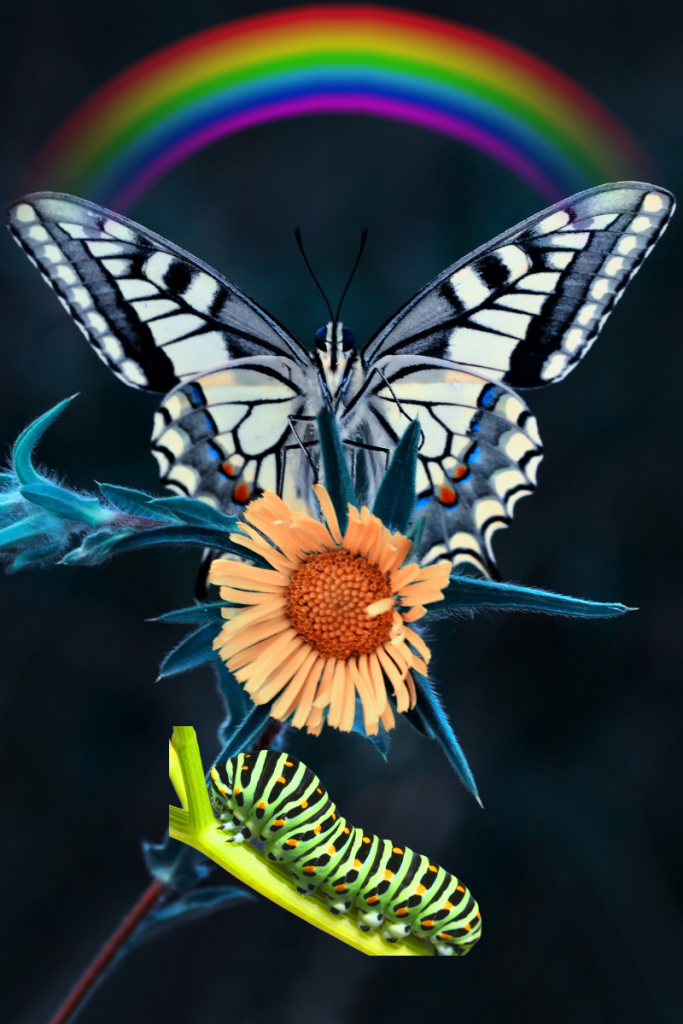
Imagine time not as a straight line but as a living spiral, coiling and uncoiling through dimensions seen and unseen. Our clocks and calendars measure only one thin strand of that spiral. The Great Timeline stretches far beyond the birth of stars and the cooling of planets. It reaches into realms that our ancestors knew well — places of spirit, dream, and archetype that modern language struggles to name, but that continue to press against the edges of our reality.
1. Before Matter: The Pre-Physical Realms
In many wisdom traditions, existence does not begin with a bang of matter, but with a breath, a word, a thought, a vibration. Creation is first spoken, dreamed, or imagined in worlds of subtle substance long before it condenses into atoms and cells.
In the Vedic cosmologies of India, before the worlds of form arise, there is the unmanifest Brahman, absolute consciousness. From that ocean of being, a subtle vibration stirs—Om, the primordial sound. Worlds bloom as thoughts in the mind of the Divine. The devas and asuras, the shining intelligences and their shadow counterparts, are not simply characters in religious myth; they are personifications of cosmic principles, patterns of consciousness that predate stars and galaxies.
Gnostic traditions speak of aeons and emanations, layers of spiritual reality cascading outward from an unknowable Source. Before matter hardens into density, there are luminous orders of being: Sophia, the wisdom that longs for expression; the Pleroma, the fullness from which all fragmented worlds are derived. In Kabbalah, too, the Ein Sof — the limitless, ungraspable divinity — overflows through the sefirot, ten spheres of creative intelligence. These are not yet worlds of rock and water, but of qualities: lovingkindness, understanding, beauty, severity, mercy. Reality begins as relationship, as a living field of forces.
Indigenous cosmologies echo this in their own languages. Many First Nations of Turtle Island describe a time when only spirit-people existed, shape-shifters and animal-kin who moved freely between worlds. In some stories, the human world is the youngest layer, built upon older strata of dream and Song. Hermetic philosophy calls this the mental plane: “As above, so below;” as within, so without. The physical is a condensation of prior, subtler realities; what we touch is the last echo of what was first imagined.
In this pre-physical expanse, non-human intelligences move as naturally as we walk. Some are guardians, some are architects, some are observers. They are known as angels, devas, naguals, djinn, kachinas, and beings for which we have no clear English name namesh. They are the keepers of patterns: how a river should curve, how a seed should remember its form, how a soul should find its way into flesh. To our ancestors, these beings were not imaginary; they were elder relatives living upstream of matter.
2. Dreamtime and the Otherworldly Allies
Among the most refined maps of this multi-layered reality is the Aboriginal Australian understanding of the Dreamtime, often called the Dreaming. To translate it merely as a mythic past is to miss its depth. The Dreaming is not over; it is ongoing. It is the eternal now in which ancestral beings sing the world into being, again and again.
In the Dreamtime, ancestor spirits move across a formless land, their journeys carving rivers, raising mountains, calling plants and animals into existence. Their paths are Songlines — not just stories, but actual energetic trails inscribed into Country. To walk a Songline is to move along a living artery of creation, to rehearse and renew the world. Songs are not entertainment; they are operating instructions for reality.
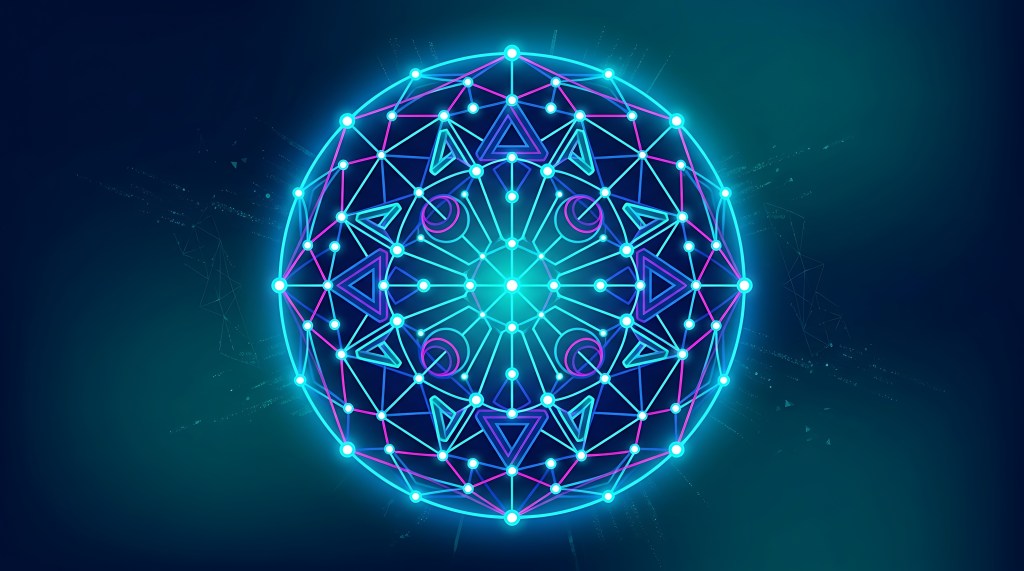
Dreamtime creatures are not cartoonish figures from children’s books. They are vast presences; a Serpent that is both a being and a river system, both a storm-front and the spinal energy of Earth itself. Kangaroo, Emu, Rainbow Serpent, and a thousand others are elder kin whose bodies are landscapes and whose breath is weather. Their “myths” are field manuals for living in precise relationship with land, water, the Sky, and each other.
Within this Dreaming, stories are told of Beings who are not only of Earth. Many Aboriginal elders speak of Star Peoples, Sky heroes, and luminous teachers who descended or appeared at thresholds: on mountaintops, in desert clearings, at waterholes that mirror the night Sky. These stories are not unique to Australia. Across the world, cultures remember the Shining Ones, the Watchers, the People from the Sky or from under the Earth, who carried knowledge of fire, agriculture, astronomy, law, and ceremony.
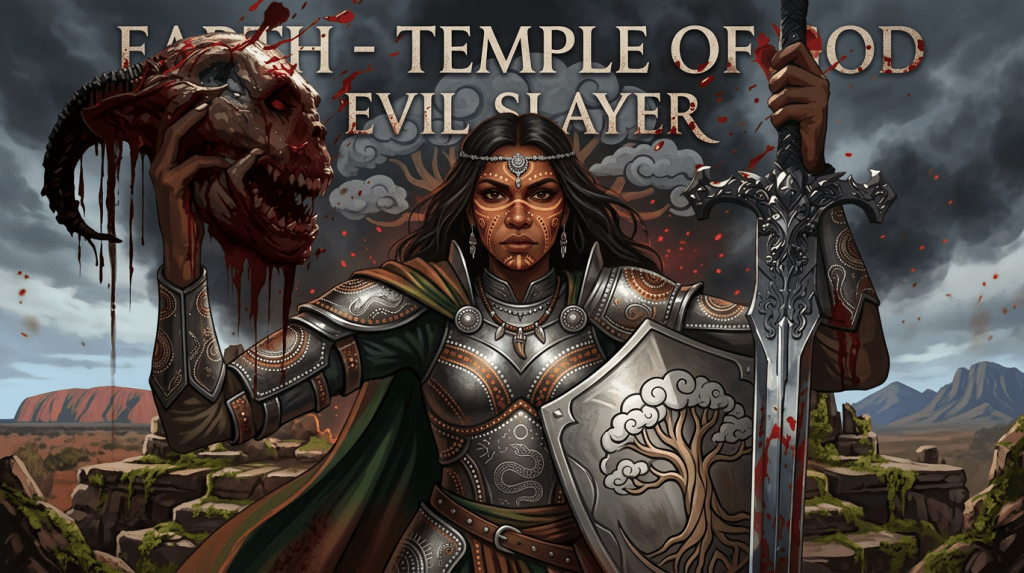
Whether we call them Star Peoples, angels, or otherworld allies, the pattern repeats: the Ancients did not stand alone. They were in relationship with intelligences that transcended a single planet, a single timeline. The Dreaming holds this clearly: the world is a cooperative artwork. Ancestor spirits, Star beings, animals, plants, rocks, and humans each hold a verse in the great Song. When one verse is forgotten, the whole Song falters.
3. The Age of the Ancients: Civilizations of Memory
Between the Dreaming and our own age lies a vast stretch of time largely invisible to textbooks but vividly preserved in myth, story, and stone. The “Age of the Ancients” is less a precise era and more a memory of when human societies lived with a conscious awareness of the more-than-human intelligences around them. The temples, pyramids, mounds, and stone circles that dot the planet are not only monuments; they are interfaces between planes of reality.
In the high Andes, stories speak of earlier peoples who could call down lightning and converse with the apus, the mountain spirits. In the Pacific, Polynesian navigators tell of wayfinders who read the stars and swells as if they were script written just for them. In West Africa, the Dogon remember teachers from Sirius who imparted knowledge of invisible stars and complex cosmology long before Western science confirmed such details.
Among the Celts, the Tuatha Dé Danann are remembered as luminous, skilled beings who arrived “in dark clouds”s” and retreated into the hills, becoming the Sidhe, the people of the mounds.
Whether we interpret these as literal encounters with off-world visitors, encoded spiritual experiences, or both, the core message remains: the Ancients situated themselves within a cosmos teeming with beings and meanings. Their sacred stories were not entertainment or superstition; they were encrypted instructions for surviving and thriving in a living universe. Embedded in these stories were warnings — of floods and fires, of icy ages and burning suns, of times when imbalance between worlds would crack the shell of stability that allowed life to flourish.
These warnings often took symbolic form. Atlantean tales of a civilization drowned by its own arrogance. Sumerian and Hebrew stories of great floods sent when humans forgot their place. Hindu cycles of Yugas, in which ages of truth and harmony gradually decline into Kali Yuga, the dark age of confusion and greed. The Ancients were not naive about collapse. They had seen it, survived it, and encoded the memory in story, stone, and star alignments so descendants would not forget.
4. Prophecy as a Living Warning
Over time, as empires rose and fell and religions hardened into institutions, many of these warnings were flattened into single-use predictions: either they had already “come true” in some distant past, or they were postponed to a vague, apocalyptic future. Both readings miss their deeper function. Prophecies are not primarily about then. They are about now — every now, in every generation.
Consider the Hopi prophecies, which speak of the “Day of Purification” and the appearance of a Blue Star heralding great change. They describe paths humanity can take: one leading to continued life in balance, another to destruction. The teaching emphasizes choice more than fate. The prophecies are mirrors, held up repeatedly, asking: Which path are you walking today?
The Mayan calendars, too, are often misread as doomsday clocks counting down to a singular end. In reality, they track nested cycles of time: seeds, growth, fruition, decay, and renewal. The much-publicized date of 2012 was not an expiration date for the world but the turning of one great wheel and the opening of another. It was an invitation to become conscious participants in a transition that was always going to come, whether we noticed it or not.
In the Norse vision of Ragnarök, the world is consumed by fire and flood, the gods themselves fall, and yet a new Earth rises from the waters, green and fertile. It is not only an ending but a purification, a radical reset of the cosmos. The Celtic stories of world ages, Vedic descriptions of cyclic yugas, Buddhist prophecies of the degeneration of Dharma — all speak of recurring thresholds, points at which accumulation of imbalance triggers a great correction.
Indigenous prophecies from Australia to the Arctic regularly frame these thresholds not as a guaranteed fate but as warnings that must be heeded and acted upon. They are like storm signals along a coast. The storm may be inevitable, but how we prepare, how we shelter one another, how we rebuild, these remain open questions. When we treat prophecy as either historical curiosity or fantastical future, we step out of the conversation it is trying to have with us right now.
The power of these traditions lies not in predicting dates but in describing patterns. When greed supplants reciprocity, when the sacred is commodified, when we forget our kinship with land and other beings, then certain consequences follow. The form these consequences take — climate disruption, species loss, social fragmentation — may be modern, but the underlying pattern was seen long ago, and we were warned.
5. Caterpillar and Butterfly Dreaming: The Metamorphic Moment
Among the many Dreamings held in Aboriginal traditions, the Caterpillar and Butterfly Dreaming offers a particularly potent image for our time. In this Dreaming, caterpillars and butterflies are not merely insects; they are ancestral beings whose forms and journeys encode laws of transformation. Their pathways trace across hills and creeks; their stories explain not just biological metamorphosis but spiritual and cultural change.
Consider the caterpillar. It lives close to the Earth, consuming leaves, inching along branch and bark. Its life seems simple, almost monotonous. Yet at some point, something in it responds to a call it cannot fully understand. It stops eating, suspends itself, spins a cocoon. From the outside, this looks like retreat, like death, like disappearance. Inside, a more radical process is underway: the caterpillar does not simply grow wings. It dissolves.
Within the chrysalis, the body of the caterpillar breaks down into a kind of soup. Imaginal cells — present all along, but dormant — begin to activate. These cells carry the pattern of the butterfly, a future self that the caterpillar could never have logically deduced from its own experience.
At first, the caterpillar’s immune system fights these imaginal cells as invaders. But they persist, cluster, communicate, and eventually orchestrate a new body. The butterfly emerges, carrying the memory of leaf and branch, but called now to nectar and Sky.
In Caterpillar and Butterfly Dreaming, this is not just biology; it is Lore. Cultures, too, go through such metamorphoses. Ways of life that once made sense reach a threshold where more consumption, more expansion, more of the same is no longer possible. The structures that protected us become prisons. The old skin must be shed, the old body liquefied. From the outside, this appears as collapse, chaos, disintegration. From the inside, something else is forming, cell by cell, story by story.
Our moment on the Great Timeline feels chrysalic. The habits of the caterpillar — endless consumption, linear growth, extraction without reciprocity — have reached their ecological and spiritual limits. We are being dissolved: in our institutions, our identities, our assumptions of control. It is tempting to see this as a pure ending, to cling to caterpillar logic even as its body breaks apart. But the Dreaming whispers another view: this dissolution is also a making-space, a return to raw potential from which a new form of life can emerge.
The question is not whether change is coming. It is: which imaginal cells will we nourish? Which patterns of future being will we allow to cluster and coordinate? Will we choose forms of life rooted in domination and separation the armoured wings that merely relocate the same extractive logic to new technologies and frontiers? Or will we midwife a butterfly that remembers the teachings of leaf and soil, that pollinates rather than devours, that knows its flight depends on the health of every flower it touches?
6. The Current Crisis: Extinction as Threshold
We live at the edge of a word: extinction. It is clinical, almost sterile, as if it belonged solely to paleontology and museum plaques. Yet it names something intimate and shattering: the severing of unique threads from the web of life. Amphibians vanishing from once-loud wetlands. Insects disappearing from windscreens and wild meadows. Great forests reduced to memory in the span of a single human life. Cultures and languages, too, slipping into silence, carrying with them entire universes of insight and relationship.
Scientists call this the sixth mass extinction, echoing earlier cataclysms when asteroid strikes or volcanic eruptions upended the planet’s balance. This time, the primary driver is a single species: our own. Industrial civilisation, particularly in its recent globalised form, has burned through stored sunlight in the form of fossil fuels, destabilized climate patterns, and acidified oceans. The caterpillar has eaten nearly every leaf within reach, and now finds itself dangling over an abyss of its own making.
This moment is not a surprise to the deep traditions. They spoke of it in their own languages. Hopi elders warned of a time when “the seas will turn black, and all life in the seas will die,” when strange webs would crisscross the Sky, when the land itself would shake more frequently. Aboriginal elders spoke of the “upside-down world,” when seasons would no longer follow their proper patterns, when sacred sites would be desecrated for short-term gain. Norse seers spoke of Fimbulwinter and scorching fires; Vedic texts describe Kali Yuga as an age when lies are taken as truth, when the Earth is valued only for its resources, when people are cut off from the sacred.
We tend to treat these prophecies as allegories, or as distant threats meant for some other time, some other people. Yet we are living many of their images in real time. The point is not that ancient seers predicted carbon emissions and plastic gyres by name. It is that they perceived recurring patterns of forgetting and imbalance, and they warned that if humanity turned entirely away from its responsibilities as a younger sibling in the web of life, a great correction would come. That correction is not punishment from an angry god; it is consequence woven into the fabric of reality.
Extinction, then, is both a scientific term and a spiritual one. It names a threshold. Once crossed, certain possibilities are gone, at least in this cycle. There is grief in that, a grief we must not bypass. But extinction also forces a question that prophecy has always held before us: will we continue doubling down on the logic that led us here, or will we allow ourselves to be transformed? The warnings were never simply “You will die.” They were also, always, “You can choose another way.”
7. At the Hinge of the Great Timeline
To be alive now is to stand at a hinge in the Great Timeline. Behind us stretches an ancestry that is not only human: star-forged atoms, single-celled pioneers, fungi weaving soil, forests breathing oxygen into the Sky, animal teachers showing us how to move, hunt, nest, and care. Alongside these move Spirit beings, Dreamtime ancestors, Shining Ones, watchers and whisperers who have accompanied us from the first stirrings of consciousness. We are the latest expression of a vast experiment in relationship.
Ahead of us lies radical uncertainty. No tradition can guarantee an outcome for this particular convergence of crises. What they can offer is orientation: reminders of who we are and how we might respond. We are not isolated consumers on a dying rock; we are participants in a multi-species, multi-dimensional community that is trying to metabolize a dangerous excess and find a new form of balance.
Remembrance is not nostalgia for some imagined golden age. It is the active practice of re-weaving ourselves into the web of existence. This might look like learning the names and needs of the watershed that holds you, listening to Indigenous elders whose lineages have carried land-based wisdom through centuries of assault, restoring a small patch of habitat, or choosing work that heals rather than harms. It might also look like grief rituals, dream tending, and the recovery of old practices of prayers or Namingartha, and Song that align us with more-than-human allies.
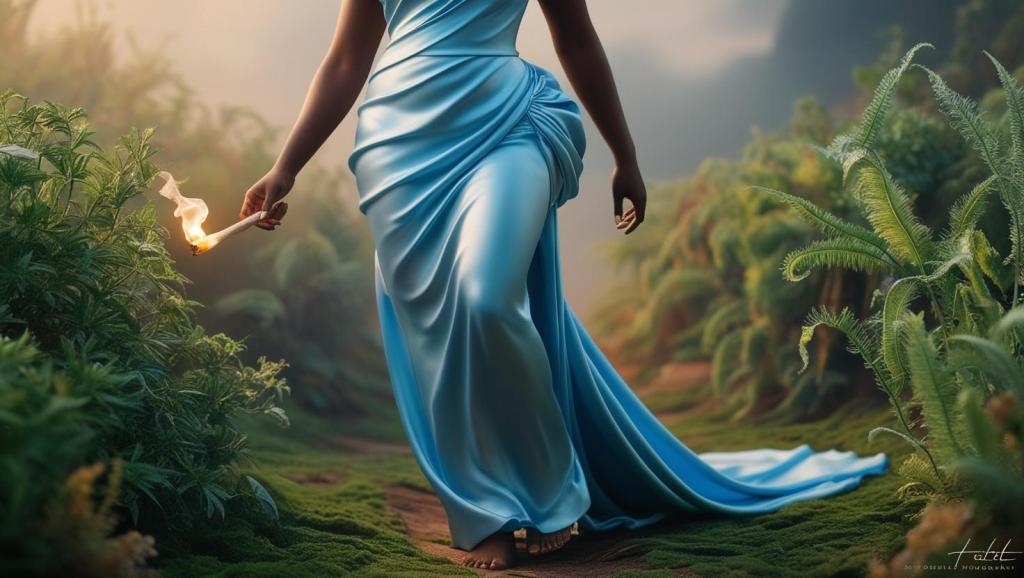
On the inner level, remembrance means recalling that we, too, are made of multiple layers. We are bodies and histories, but also subtle fields of attention and intention. The pre-physical realms are not some distant heaven; they are woven through us as intuition, imagination, and the quiet guidance that arises when we listen deeply. The Dreaming is not only in Australia; it pulses beneath the pavement of every city and the roots of every surviving forest, waiting for us to remember how to walk and work in right relationship.
No single person can carry the weight of this threshold, and no one is being asked to. What is asked of each of us is more intimate: to become, in our own particular way, an imaginal cell of the future we wish to see. To protect what can still be protected. To mourn what is passing without surrendering to nihilism. To listen for the subtle promptings that say, “Here, this small act, this conversation, this restoration, this refusal, this offering — do this.”
The Great Timeline did not begin with us, and it will not end with us. Yet the choices we make now will echo forward into forms of life we cannot yet imagine. We are somewhere between caterpillar and butterfly, between warning and response, between forgetting and remembrance. To stand here with eyes open, heart engaged, and hands ready to work is not a guarantee of salvation. It is, simply, what it means to be fully human at the edge of extinction and the edge of awakening, listening for the next verse of the Song.


Leave a Reply